Mount Rinjani is a massive active stratovolcano on the island of Lombok, Indonesia. It stands at 3,726 meters (12,224 ft). Mount Rinjani is the second-highest volcano in Indonesia and is celebrated for its stunning caldera, which contains the turquoise Segara Anak Lake and a smaller, active volcanic cone called Mount Barujari.
Mount Rinjani Trekking Status & Seasons.
- Current Status. From January to March, the mountain is currently closed for the annual rainy season.
- Reopening Date. Hiking routes are scheduled to reopen from April to December.
- Best Time to Visit. The ideal window for trekking is during the dry season, from April to October.
- April–May. Lush, green landscapes and fewer crowds.
- July–August. Peak season with the most stable weather but the highest hiker traffic.
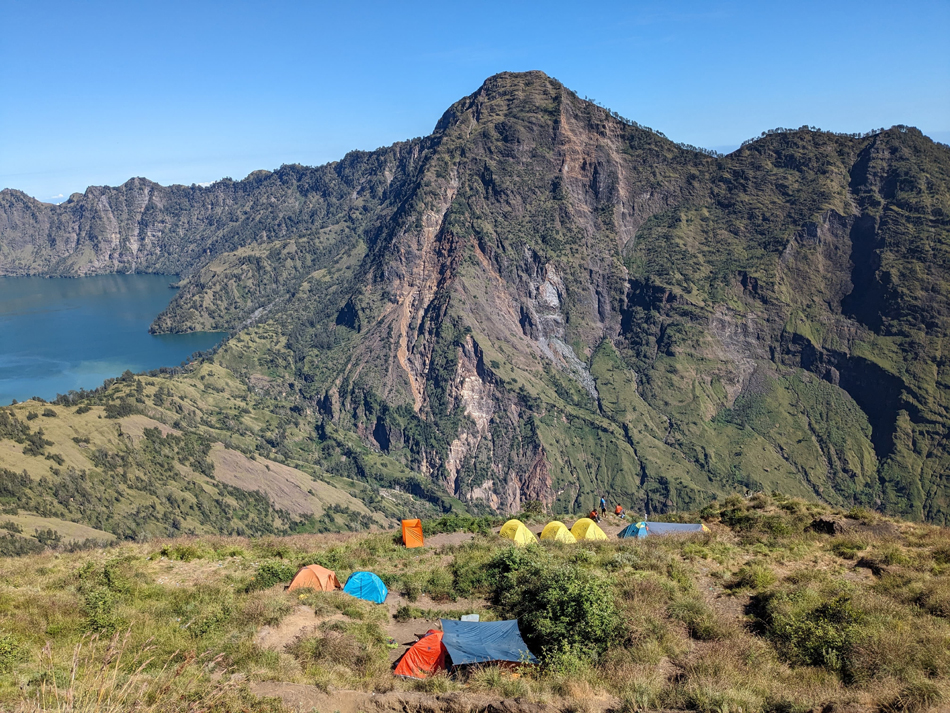
Getting Mount Rinjani.
Getting to Mount Rinjani typically involves a two-step process: traveling to the island of Lombok and then taking ground transport to the gateway villages of Senaru or Sembalun
Step 1: Arriving in Lombok
- By Air: Fly into Lombok International Airport (LOP).
- From Bali. Frequent 40-minute flights.
- From Jakarta. 2-hour direct flights.
- International. Direct flights from Singapore and Kuala Lumpur.
- By Sea from Bali:
- Fast Boat. Quickest sea option (1.5–3 hours). Departure from Padang Bai or Seranganto Bangsal Harbor.
- Public Ferry. Budget-friendly but slow (4–5 hours). Departure from Padang Bai to Lembar Harbor
Step 2: Ground Transport to the Mountain
Once in Lombok, you must drive to the northern trekking gates. Our trekking package includes pick up from the Airport, Senggigi, and Bangsal harbor.
| Origin | Destination | Estimated Time | Est. Cost (Private Car) |
|---|---|---|---|
| 2.5 – 4 hours | 700k – 1,000k IDR | ||
| 1 – 1.5 hours | 500k – 600k IDR | ||
| 2 – 2.5 hours | 600k IDR |
- Public Transport. You can take a DAMRI bus from the airport to Senggigi.
- Taxis. Official taxi counters at the airport offer fixed-price transfers to most destinations.
Its Worted to visit Mount Rinjani?
Mount Rinjani is absolutely worth it, but only if you are prepared for an extreme physical challenge and basic conditions. It is widely considered one of the most rewarding treks in Southeast Asia due to its “unreal” volcanic landscapes and the massive sense of achievement upon finishing
Why Mount Rinjani Is Worth It
- World-Class Views. The summit (3,726m) offers a 360-degree panorama of Lombok, Bali’s Mount Agung, and the Gili Islands. The sight of the turquoise Segara Anak Lake inside the caldera is often cited as the highlight.
- Diverse Ecosystems. You trek through everything from lush tropical rainforests (Senaru side) to expansive golden savannahs (Sembalun side) and dramatic volcanic rock.
- Cultural Experience. The mountain is sacred to the local Sasak and Balinese people; you may see spiritual offerings being made at the lake.
- Personal Achievement. Many hikers describe the experience as “transformative” and “life-changing” because of the mental and physical grit required to finish.
The “Unfiltered” Reality (The Downsides)
- Extreme Difficulty. The final summit push is a “brutal” 3-hour climb on loose volcanic sand where you slide back one step for every two steps forward. Only about 25% of hikers actually reach the very top.
- Trash & Sanitation. A common and serious complaint is the amount of litter, toilet paper, and human waste at campsites like the Sembalun Crater Rim.
- Basic Conditions. There are no permanent toilets or cabins. You will sleep in tents and use “toilet tents” (a hole in the ground covered by a small tent).
- Crowds. During peak season (July–August), trails and campsites can become very congested, leading to queues on the path to the summit.
Tips to hike Mount Rinjani.
To hike Mount Rinjani successfully, you need to focus on physical conditioning, essential gear, and selecting the right trekking operator. Here is the information you need to prepare before the hike to Mount Rinjani.
Physical Preparation
- Cardio & Stamina. Train for 1–2 months before your trek. Focus on jogging, cycling, or stair-climbing to improve lung capacity.
- Leg Strength. Incorporate squats, lunges, and calf raises to handle the steep inclines.
- Trek Simulation. Practice hiking with a weighted backpack (approx. 5–10 kg) to get your body used to the load you will carry.
- Mental Grit. Be prepared for long days (6–10 hours of hiking) and basic campsite conditions.
Essential Packing Checklist
- Footwear. Sturdy hiking boots with excellent grip are mandatory for the loose volcanic sand.
- Clothing Layers:
- Daytime. Lightweight, moisture-wicking T-shirts and shorts.
- Night/Summit. Warm layers (fleece or thermal), a windproof/waterproof jacket, gloves, and a beanie. Temperatures at the summit can drop below 5°C (41°F).
- Gear:
- Headlamp. Crucial for the pre-dawn (approx. 3:00 AM) summit push.
- Trekking Poles. Highly recommended to reduce knee strain and help with balance on sandy sections.
- Toiletries. Sunscreen (high SPF), insect repellent, personal medication, and wet wipes.
Strategy & Safety Tips to Hike Mount Rinjani.
- Choose the Right Route:
- Sembalun. Best for reaching the summit due to a higher starting point.
- Senaru. Better for views of the crater rim and lush rainforest scenery.
- Acclimatize. Drink at least 2–3 liters of water per day and pace yourself to prevent altitude sickness.
- Hire an Operator. It is mandatory to hike with a licensed guide. Research operators on platforms like TripAdvisor or Google Maps to ensure they follow “Leave No Trace” environmental principles.
- Avoid the Crowd. May and September are often cited as the best months, offering a balance of green landscapes and clearer weather with fewer people.
Hiking Mount Rinjani in 2026 involves strict legal and physical requirements mandated by the Mount Rinjani National Park (TNGR) authority.
1. Mandatory Legal Requirements
- Licensed Guide & Porters. All international trekkers are legally required to be accompanied by a licensed guide and porters. For 2026, regulations mandate 1 guide for every 4 people and a minimum of 2 porters per group.
- Digital Permit (e-Ticket). You must have an official digital permit booked via the e-Rinjani application. Foreigners are not permitted to buy these tickets personally and must go through a registered trekking operator (TO).
- Identification. You must carry your original passport (Foreigners) or KTP (Indonesian Citizens) for verification at the entrance gates.
- Health Certificate. A medical certificate from an official health facility is mandatory. It must confirm you are fit for high-altitude trekking to avoid being denied entry.
- Age Limit. The minimum age to hike is 10 years old. Children under 17 must be accompanied by an adult.
2. Financial Specifics (2026)
- Entrance Fees. For international trekkers, the fee is IDR 250,000 per person, per day.
- Insurance. Basic accident insurance is included in the official e-ticket, covering accidental death (IDR 30M) and basic medical/evacuation (IDR 4M–10M). Additional travel insurance covering high-altitude trekking (up to 3,726m) is strongly recommended.
3. Operational Rules
- Daily Quota. There is a strict limit of 400–500 trekkers per day across all routes.
- Zero-Waste Policy. You are required to register the number of potential trash items (bottles, cans, etc.) before the hike and must carry all waste back down.
- Prohibited Items. Drugs, dangerous weapons, fireworks, and alcohol are strictly forbidden. Use of drones requires a separate permit from park authorities.